
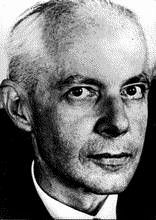
BELA BARTOK
25thMarch 1881 --- 26thSeptember 1945
Last Updated on April 2025
By Steven Ritchie
And now for the Music

Real time Sequenced from Piano Competition 2006, below..
NEW (4647)"Etude, Op.18, No.2". Real time Sequenced by Mikhail Mordvinov. NEW (4646)"Etude, Op.18, No.1". Real time Sequenced by Mikhail Mordvinov.
Thanks to Chris Todd for the music below, Email(CSharpMin @ aol.com)
(3440)"Mikrokosmos Opus.22, No.143, Divided Arpeggios". Sequenced by Chris Todd. (3439)"Mikrokosmos Opus.22, No.146, Ostinato". Sequenced by Chris Todd. (3438)"Mikrokosmos Opus.22, No.146, Ostinato". Sequenced by Chris Todd. (3437)"Mikrokosmos Opus.22, No.152, Six Dances in Bulgarian Rhythm No.5". Sequenced by Chris Todd.
Thanks to Nicolas Iline for the music below, Email(niline309@)gmail.com)
(3381)"Piano Concerto No.3, Mov.1". Sequenced by Nicolas Iline. (3380)"Piano Concerto No.3, Mov.2". Sequenced by Nicolas Iline. (3006)"Piano Concerto No.2, Mov.1". Sequenced by Nicolas Iline. (3007)"Piano Concerto No.2, Mov.2". Sequenced by Nicolas Iline. (3008)"Piano Concerto No.2, Mov.3". Sequenced by Nicolas Iline. (3003)"Piano Concerto No.1, Mov.1". Sequenced by Nicolas Iline. (3004)"Piano Concerto No.1, Mov.2". Sequenced by Nicolas Iline. (3005)"Piano Concerto No.1, Mov.3". Sequenced by Nicolas Iline.
Thanks to Tony Matthews for the music below, Email(TonyM@absolutesolutions.co.uk)
(2489)"Ten Easy Piano Pieces, Dedication Mov.0". Sequenced by Tony Matthews. (2490)"Ten Easy Piano Pieces, Peasant's Song Mov.1". Sequenced by Tony Matthews. (2491)"Ten Easy Piano Pieces , Painful Wrestling Mov.2". Sequenced by Tony Matthews. (2492)"Ten Easy Piano Pieces, Slovak Peasant's Dance Mov.3". Sequenced by Tony Matthews. (2493)"Ten Easy Piano Pieces, Sostenuto Mov.4". Sequenced by Tony Matthews. (2494)"Ten Easy Piano Pieces, An Evening at the Village Mov.5". Sequenced by Tony Matthews. (2495)"Ten Easy Piano Pieces, Hungarian Folksong Mov.6". Sequenced by Tony Matthews. (2496)"Ten Easy Piano Pieces, Aurora Mov.7". Sequenced by Tony Matthews. (2497)"Ten Easy Piano Pieces, Hungarian Folksong Mov.8". Sequenced by Tony Matthews. (2498)"Ten Easy Piano Pieces, Finger-Exercise Mov.9". Sequenced by Tony Matthews. (2499)"Ten Easy Piano Pieces, Bear Dance Mov.10". Sequenced by Tony Matthews. (1308)"Music for String Instruments, Percussion and Celesta, 2nd mov". Sequenced by Dr David Siu (1309)"Music for String Instruments, Percussion and Celesta, 4th mov". Sequenced by Dr David Siu (30a)"Courting Song". Sequenced by Rob Dwyer (31a)"Children's piece No.2". Sequenced by Faren Raborn 1310)"Piano Sonata Mov.1". Sequencer Unknown (1311)"Piano Sonata Mov.2". Sequencer Unknown (1312)"Piano Sonata Mov.3". Sequencer Unknown (23a)"Mikrokosmos". Sequencer Unknown ? (361)"A Rumanian Dance No.1". Sequencer Unknown
If you done any Classical pieces of say for example, Delius, mozart, and so on etc,
please email them to the classical music site with details to
"classical (@) ntlworld.com" (written this way to stop spammers)
just remove spaces and brackets for email address), thank you.
Visitors to this page --
Back to Classical Midi Main Menu click "HERE"
