
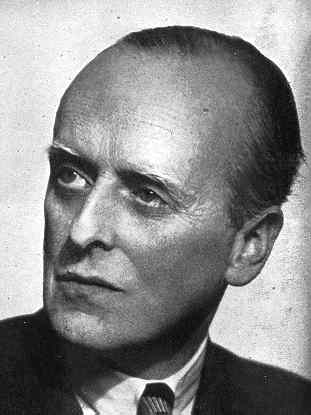
ERIC COATES

---

Eric Coates (1886-1957) - father of British Light Music:

Eric Coates showed musical ability from an early age, and as a boy received violin lessons and instruction in music theory. He later progressed to the viola and played both instruments in orchestras including under the batons of both Henry Wood and Sir Thomas Beecham. He had privately written a number of pieces before enrolling in the Royal Academy of Music to formally study composition and the viola. He threw himself fervently into all manner of musical activities, playing with numerous groups in addition to his normal studies, but increasingly found his viola playing hindered by a pain and consequent weakness in his left hand. Over time he was forced to devote less time to playing and more to composition, but found his skills as an arranger and composer to be much in demand.

From the start he made it clear that he was not interested in composing "serious" classical pieces but wanted to focus on "lighter" works. Thus he created settings of many poems, arranged all manner of songs, wrote many orchestral pieces for concert hall and stage, and established himself as the father of British Light Music. Although there have been "light" composers from many eras in many countries, it is often thought of as a British phenomenon.What is Light Music? It is pleasant melodic music, less demanding of the listener and easier on the ear. It does not try to make any profound statements or push boundaries but is content simply to entertain, like the waltzes and polkas of the Strauss family. That should make this style of music ideally suited for film, radio and television, but Coates was not interested in composing directly for these media. He did not want his music to be constrained by such needs, but wanted complete freedom to shape his pieces. Nevertheless his music did indirectly find a useful outlet in these media.

First he had written an orchestral suite called the "London Suite", the first movement "Covent Garden" using the song "Cherry Ripe", but it was the third movement march called "Knightsbridge" which caught the public attention when it was used by the radio programme "In Town Tonight". Then there was another piece "By the Sleepy Lagoon" sometimes called just "Sleepy Lagoon", a Valse Serenade for strings. This became a hit and was later adopted by the BBC as the signature for their popular programme "Desert Island Discs" which has run for more than 50 years. Then there is his piece called "Calling All Workers". Initially he wrote this during the war years at his wife's suggestion for the staff at the Red Cross depot where she worked. This theme was also adopted for a radio programme "Music while you Work". Between these three works, Coates' music was very familiar indeed to the BBC's audience, and the corporation commissioned the composer to write a work for their re-opening of Television services in 1946 - this was the "Television March".

With his track record and popular success in radio and television, it is not surprising that Coates had been asked to compose for film. As previously noted, the composer did not warm to this idea and had turned down previous approaches. However, in 1954 his name was naturally mentioned in the context of a new film. The "Dambusters" story of the bouncing bomb was very British and patriotic, and Coates was well-known for his marches. The film makers were advised of Coates dislike of film scoring, so they decided to ask him instead for such a march. When Coates' publisher conveyed this request to the composer, Coates replied that he had finished just such a march the previous day. The march lying on Coates desk was therefore named "The Dambusters March", and Leighton Lucas was hired to weave this into the film's score. This was one of the last major pieces written by Eric Coates.

MY sincere thanks go to George Pollen for kindly providing the Bio .

Last Updated on 24th January 2008
By Reg

And now for the Music

I like to thank George Pollen for the following music, to contact George please visit his Website here

"Knightsbridge March" , more great pieces of music, sequenced by George Pollen.

"Soliloquy (My boy Bill) from Carousel" , another great piece of music, sequenced by George Pollen.

Please let James Pitt-Payne know your thoughts on this piece, contact James, Click Here. .

(3002)"Halcyon Days (Elizabeth Tudor)" a lovely sequenced by James Pitt-Payne.

(3003)"Sleepy Lagoon" a lovely sequenced by James Pitt-Payne.

(3004)"Star Of God" a lovely sequenced by James Pitt-Payne.

(2932)"Princess of the Dawn" a lovely sequenced by James Pitt-Payne.

(2933)"The Fairy tales of Ireland" a another lovely sequenced by James Pitt-Payne.

(2934)"The Green Hills of Somerset" Sequenced by James Pitt-Payne.

(2935)"The Little Green Balcony" Sequenced by James Pitt-Payne.

This page has been visited since --
FastCounter by bCentral


If your interest's match mine or you would like to send in your Classical style compositions in midi file format then please E-mail me at  

classicalmidi (@) gothere . uk . (com) please remove all spaces and brackets to get to my email address, fight against spam.

Back to Classical Midi Main Menu click HERE            

                                             BACK TO MY HOME PAGE Classical musical home page
