
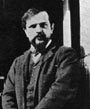
CLAUDE DEBUSSY
22ndAusgust 1862 --- 26thMarch 1918
Last Updated on September 2026
By Steven Ritchie
And now for the Music

NEW (5029)"The Hills of Anacapri, 5th Prelude, Book 1". Sequenced by Steven Ritchie.
(4995)"Douze Etudes, Etude, No.1". Sequenced by Steven Ritchie.
(4994)"Douze Etudes, Etude No.2". Sequenced by Steven Ritchie.
(3917)"Arabesque". Sequenced by Steven Ritchie.
(4786)"Jimbo Lullaby from Children's Corner". Sequencer by Unknown.
(4785)"Srrenade for the Doll from Children's Corner". Sequencer by Unknown.
(4459)"The Little Shepard". Sequencer by Unknown.
(4458)"The Snow is Dancing". Sequencer by Unknown.
(4457)"Suite Bergamasqu Passe Pied". Sequencer by Unknown.
Thanks to Katsuhiro Oguri for the following music below.
(3923)"Preludes, No.10, La Cathedrale Engloutie". Sequenced by Katsuhiro Oguri. (394)"Masque". Sequenced by Katsuhiro Oguri. Thanks to David Lovell for the following music below.
New (3922)"La Plus Que Lente". Sequenced by David Lovell. Thanks to David Siu for the following music below.
(3921)"Nocturnes, No.2, Fetes". Sequenced by David Siu. (71)"Nocturnes Nuges". Sequenced by David Siu. Thanks to Robert Finley for the following music below.
New (3920)"Ballad". Sequenced by Robert Finley. Thanks to George Pollen for the following music below.
(695)"Clair de Lune". Sequenced by George Pollen. Thanks to Reinhand Czwiertnia for the following music below.
(318)"Four Ballet Suite". Sequenced by Reinhand Czwiertnia. Thanks to Peter R Wolfe for the following music below.
(320)"Six Pigaphes Antquies". Sequenced by Peter R Wolfe. Thanks to George Silvis for the following music below.
(321)"Quant j'ia ouy le ta bourin". Sequenced by George Silvis. (323)"Hiver vous n'etes qu' un vilain". Sequenced by George Silvis. Thanks to L.Mondanare for the following music below.
(395)"Mouvement from Imafesl". Sequenced by L.Mondanare. Thanks to Richard Eaton for the following music below.
(423)"Reverie for Clarinet or Cello solo". Sequenced by Richard Eaton. (912)"Beau Soir,(Info by Allen Gary & Edward Gold)". Sequencer unknown. (12)"Reverie". Sequencer unknown. (209)"Children Corner, Dr Gradus ad Parnassum". Sequencer unknown. (94)"Deux Arabesques, No.1". Sequencer unknown. (94a)"Deux Arabesques, No.2". Sequencer unknown. (102)"Menuet Mov.3 from the suite Petite". Sequencer unknown. (118)"Sarabande No.2 from Pour la Piano". Sequencer unknown. (198)"String Quartet in G Minor". Sequencer unknown. (303)"Piano Trio in G, No.2". Sequencer unknown. (304)"Piano Trio in G, No.3". Sequencer unknown. (305)"Piano Trio in G, No.4". Sequencer unknown. (322)"Cortege Petite Suite". Sequencer unknown. (324)"Children's Corner". Sequencer unknown. (393)"Golliwog's Cake Walk". Sequencer unknown.
If you done any Classical pieces of say for example, Delius, mozart, and so on etc,
please email them to the classical music site with details to
"classical (@) ntlworld.com" written this way to stop spammers
just remove spaces and brackets for email address, thank you.
Visitors to this page --
Back to Classical Midi Main Menu click "HERE"
